
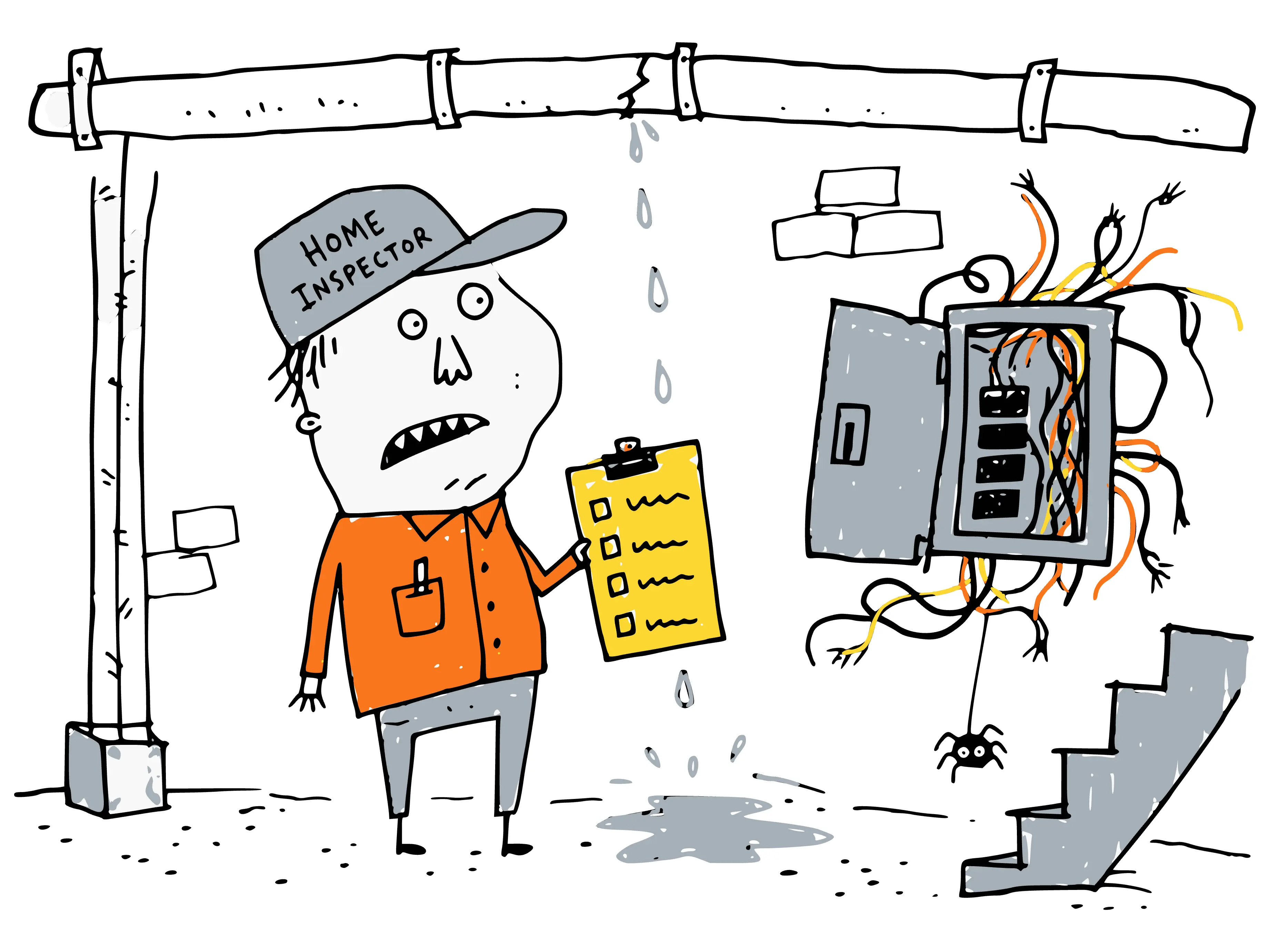
You can find out what a buyer's inspector will say about your house before it ever hits the market. That is the idea of a pre-listing inspection: the same inspection a buyer would order, done early and paid for by you. Plenty of sellers don't realize it is an option.
The inspection contingency period is one of the harder stretches of any contract. You get an accepted offer, you finally exhale, and then you spend the next week waiting to see what the buyer's inspector turns up. Will they ask for a credit? Will they walk away? Most of that stress comes from not knowing.
What a pre-listing inspection is
A pre-listing inspection is the same inspection a buyer would order. It is done earlier, and you pay for it. You hire an inspector of equal qualification to anyone a buyer would bring in, and they walk the property the same way:
- Roof, gutters and drainage
- Foundation and structure
- Electrical panel and wiring
- Plumbing and HVAC
- Grading and exterior conditions
You get the same kind of report a buyer would get. The only real differences are the timing and who reads it first. Cost is in line with a standard inspection, usually a few hundred dollars depending on the age and size of the house.
Knowing early gives you time
Time is the one thing sellers lack once a contract is signed. Having the report in hand before you list changes that.
Small fixes
A loose railing, a failed GFCI outlet, a section of gutter pulling away from the fascia: these are cheap to correct on your own schedule with your own contractor. Handling them ahead of time also keeps them out of a buyer's repair request, where the estimate is rarely the one you would have gotten yourself.
Major systems
Then there are the bigger items: an older roof with a few years left in it, knob-and-tube wiring, a heater or water heater near the end of its run, an electrical panel that is undersized for the way people use a house now. These are not weekend fixes. They carry real cost and real lead time.
Whether to address them before listing depends on your situation more than anything else. If you have the time and the resources to get the work done before you go on the market, it may make sense to do it. You control the contractor, the timeline and the price, and a completed repair removes a question from the buyer's mind entirely.
Plenty of sellers don't have that time or that budget, and that is a normal place to be. It does not mean you should hold off on listing. It means you and your REALTOR® go in knowing.
From there you can price the home accordingly, gather whatever documentation and warranties exist, and set expectations with buyers up front rather than renegotiating in the middle of a contract.
What you learn, you disclose
Pennsylvania's Real Estate Seller Disclosure Law requires sellers to complete a Seller's Property Disclosure Statement covering known material defects, delivered to the buyer before an agreement of sale is signed. An inspection creates knowledge, and that knowledge belongs on the disclosure. That gives some sellers pause, and I understand why.
Here is how I would look at it. The condition of your home is what it is whether or not you pay someone to write it down. A buyer's inspector is very likely to find the same items two weeks into the contract. When issues surface then, they arrive framed as problems, usually attached to a repair request. When they are disclosed up front, they read as a seller being straight with people. Disclosing early is not a weakness in your position. It is often what keeps a deal calm. Talk with your agent, and an attorney if the situation calls for it, about how and what to share.
Older housing stock, older histories
If you own a home in Mt. Airy, Chestnut Hill, Germantown, Roxborough or Manayunk, it has been standing a long time, and much of Montgomery County is not far behind. Stone foundations, plaster walls and additions from three different decades are the norm. Buyers here already expect a house built in 1925 to act like one. They react badly to late surprises.
Is it right for every listing?
Not always. You can probably skip it if, among other things:
- Your home is new construction
- You finished a down-to-the-studs renovation in the last year
A pre-listing inspection does not replace the buyer's. A buyer can still elect an inspection contingency and hire their own inspector, and many will, whether or not you hand them a report. What your inspection buys you is preparation, not immunity.
For most other sellers, it is worth serious consideration. You are going to find out what is in the basement either way. Finding out first is better.
If you are thinking about listing this year and want to talk through whether a pre-listing inspection makes sense for your house, reach out. It is a short conversation and it usually saves a longer one later. For sellers in Flourtown and Oreland, each town's page covers the selling side in more detail.
I am a REALTOR®, but I am not your REALTOR®, at least not yet. This is general information, not advice about your specific property. Before you decide one way or the other, talk it through with a qualified real estate agent or a real estate attorney who knows your house, your timeline and your situation.
Sources: Pennsylvania Real Estate Seller Disclosure Law, 68 Pa.C.S. §§ 7301–7315 (PA Department of State).
Henry is a Philadelphia-based REALTOR® serving buyers and sellers in Northwest Philadelphia and Montgomery County, PA. Questions? Get in touch.
Frequently asked questions
What is a pre-listing inspection?
It is the same inspection a buyer would order: roof, foundation, electrical, plumbing, HVAC and exterior conditions, written up in the same kind of report. The difference is timing and who reads it first. The seller hires the inspector before the home goes on the market and uses the findings to make repairs, set the price or prepare disclosures.
Do I have to disclose what a pre-listing inspection finds in Pennsylvania?
Yes. Pennsylvania's Real Estate Seller Disclosure Law requires sellers to disclose known material defects on a Seller's Property Disclosure Statement delivered to the buyer before an agreement of sale is signed. An inspection creates knowledge, and known defects it turns up belong on the form. Talk to your agent or a real estate attorney about how to present it.
How much does a pre-listing inspection cost?
It's in line with a standard buyer's inspection, usually a few hundred dollars depending on the age and size of the house. Add-on tests like radon or a sewer scope cost extra, the same as they would for a buyer.
Does a pre-listing inspection replace the buyer's inspection?
No. A buyer can still include an inspection contingency and hire their own inspector, and many will whether or not you share your report. What a pre-listing inspection buys you is preparation: you learn what an inspector will likely find while there is still time to fix it, price for it or disclose it on your terms.