Manayunk occupies a narrow strip of land between the Schuylkill River and the steep ridge that rises to Roxborough. The Manayunk Canal runs parallel to the river, and the towpath along it is a well-used trail connecting the neighborhood to the Schuylkill River Trail. Main Street is the commercial center, with restaurants, bars, and shops concentrated in a walkable stretch that has been active for decades.
The housing is primarily rowhouses, built densely on streets that climb sharply up the hillside. Some homes have significant views. SEPTA regional rail connects the neighborhood to Center City, and the Manayunk/Norristown line also links it to East Falls and points along the Schuylkill Valley. It is a neighborhood with a lot of character and a buyer pool that tends to be younger and more active.
Talk to Henry| Median sale price (Sep 2026) | $375,000 |
|---|---|
| Homes listed (Sep 2026) | 14 |
| Homes sold (Sep 2026) | 12 |
| Pended (Sep 2026) | 9 |
| Listed volume (Sep 2026) | $5.4M |
| Sold volume (Sep 2026) | $5.2M |
| Listed median (Sep 2026) | $357,450 |
| Average days on market | 47 days |
| Zip code | 19127 |
| Region | Northwest Philadelphia |
Based on information from Bright MLS for 9/1/2026 through 9/30/2026; data is reliable but not guaranteed.
Boundary and reference data from OpenStreetMap contributors, available under the ODbL.
Lines are scaled to each metric’s own range to compare trend shape. Hover any month for actual values.
All Data From Bright MLS. Information deemed reliable but not guaranteed.
| Month | Units listed | Listed volume | Listed median | Pended | Units sold | Sold volume | Sold median | Days on market |
|---|---|---|---|---|---|---|---|---|
| Oct '25 | 15 | $6.1M | $355k | 9 | 9 | $3.7M | $320k | 48 days |
| Nov '25 | 9 | $4.6M | $485k | 6 | 11 | $4.4M | $325k | 33 days |
| Dec '25 | 5 | $2.2M | $380k | 1 | 10 | $3.9M | $292k | 50 days |
| Jan '26 | 10 | $5.0M | $404k | 7 | 6 | $2.3M | $387k | 51 days |
| Feb '26 | 15 | $7.8M | $435k | 0 | 5 | $1.5M | $280k | 58 days |
| Mar '26 | 16 | $7.5M | $392k | 13 | 13 | $5.9M | $415k | 82 days |
| Apr '26 | 26 | $12.6M | $414k | 7 | 12 | $4.5M | $324k | 20 days |
| May '26 | 12 | $4.6M | $355k | 9 | 14 | $8.1M | $440k | 55 days |
| Jun '26 | 21 | $10.5M | $425k | 8 | 13 | $6.5M | $343k | 32 days |
| Jul '26 | 13 | $5.7M | $379k | 6 | 13 | $6.0M | $401k | 29 days |
| Aug '26 | 19 | $9.8M | $440k | 6 | 10 | $5.4M | $442k | 65 days |
| Sep '26 | 14 | $5.4M | $357k | 9 | 12 | $5.2M | $375k | 47 days |
Based on information from Bright MLS for 10/1/2025 through 9/30/2026; data is reliable but not guaranteed.
Main Street has been Manayunk's commercial spine for a long time. The strip runs roughly parallel to the canal and is lined with restaurants and bars that draw visitors from across the city. It is lively on weekends and has held its character through several cycles of the broader market. For residents, it offers real walkability for dining and nightlife.
The housing stock is almost entirely rowhouses, packed tightly along streets that rise quickly from the canal. Homes on the upper streets often have views of the river valley below. Interiors vary widely in condition and renovation level. Parking and garage access can be a real consideration depending on the block. The neighborhood has attracted significant renovation investment over the years.
The towpath along the Manayunk Canal connects directly to the Schuylkill River Trail, one of the better urban trail systems in the region. From there, riders and runners can reach Fairmount Park, Center City, and points well beyond. Regional rail access is straightforward, with Center City about 20 minutes by train from Manayunk station.
Manayunk closed 12 sales in September at a median of $375,000, down from August’s $442,500, which was the highest monthly median of the past 12 months. September’s figure sits within $50 of the 12-month median of $374,950. Sale prices ran from $205,000 to $1,075,000, the usual spread for a market that mixes rowhouses with larger detached homes.
September closings averaged 47 days on market, down from 65 in August. Cumulative days on market ran to 69, so some of what sold had been listed before, taken off and brought back. Nine of the 12 sales closed below their original asking price.
Inventory edged up to 40 homes at the end of September after three straight months at 39. That is the highest month-end count of the past year and about four months of supply at August’s sales pace. New listings slowed to 14 from 19, and nine homes went under agreement, up from six in August.
Based on information from Bright MLS for 9/1/2026 through 9/30/2026; data is reliable but not guaranteed.
The T3 Home Demand Index (HDI) measures buyer urgency relative to available supply, scored against each market’s 2019 activity. Bright MLS reads below 70 as limited demand; 70–89 slow; 90–109 steady; 110–129 moderate; 130 and above high. Updated monthly.
The Philadelphia metro HDI fell to 77 in September 2026, down five points from August and still in the Slow tier. It sits two points below its September 2025 reading of 79. All six segments lost ground on the month. Luxury single-family homes dropped 12 points to 60, into the Limited tier, but they remain the only segment above their September 2025 level. Entry-level condos fell 10 points to 97 and stayed Steady. Entry-level single-family demand slipped one point to 76, nine points under where it sat a year ago. T3 attributed the drop to “rate-and-affordability fatigue.” Freddie Mac’s 30-year average passed 7 percent on September 24, and I wrote about why rates rose after the Fed’s September increase.
Source: Bright MLS T3 Home Demand Index · homedemandindex.com · All 33 data points sourced from monthly report pages.
As of September 2026, the median closed price in Manayunk was $375,000 across 12 sales, down from August’s $442,500 and within $50 of the 12-month median of $374,950. Monthly medians here have run between $280,000 and $442,500 over the past year, the usual swing for a market that mixes rowhouses with larger detached homes.
In September 2026, homes in Manayunk sold in an average of 47 days on their current listing, down from 65 in August. Cumulative days on market, which also counts earlier listing periods for the same home, ran to 69. That gap says some of September’s 12 sales had been on and off the market before they closed.
Manayunk is rowhouse-dominant, with hillside Victorian rows climbing from Main Street up toward the ridge. There is also significant new-construction townhome activity, particularly along the canal and on infill lots. Detached homes are rare and sell for more.
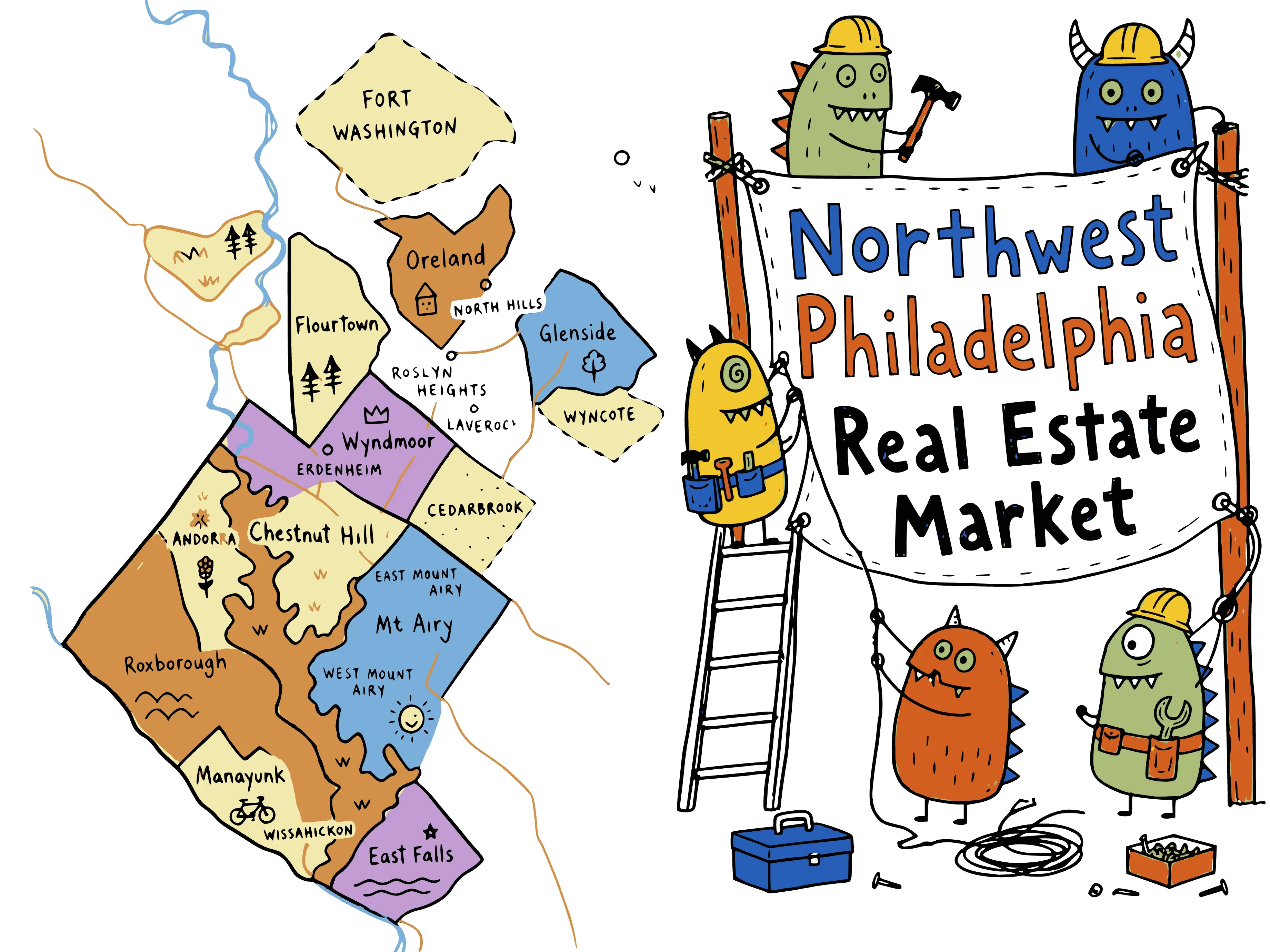
Manayunk is in zip code 19127 in Northwest Philadelphia, between East Falls (19129) to the southeast and Roxborough (19128) up the hill. The neighborhood sits along the Schuylkill River with the Manayunk canal towpath as a defining feature.
I work Manayunk regularly and recently listed a home on Kingsley Street here.
Manayunk is part of the Northwest Philadelphia market I work in regularly. If you are thinking about buying or selling here, I am glad to share what I know.