The Federal Reserve raised its benchmark rate by a quarter of a percentage point on Wednesday, to a range of 3.75 to 4 percent, its first increase since July 2023. Mortgage rates did not rise a quarter point in response, and they likely won't. The bond market that prices home loans moved in July and August, once it became clear the hike was coming. Rates are higher than they were this summer, and that's the bad news. The hike itself changed very little, and understanding why tells you what to watch next.
What the Fed did
On September 16 the Fed's rate-setting committee voted 12 to 0 to lift the federal funds rate to 3.75 to 4 percent, according to its statement. The reasoning took three sentences: "Inflation remains elevated. Today's policy action will support a timelier return to the Committee's 2 percent goal. The Committee will deliver price stability."
The projections released with it show 16 of the 18 officials expecting at least one more quarter-point increase before the end of the year, four of them expecting two, Yahoo Finance reported. "The plain fact is that inflation is too high and has been for too long," Chair Kevin Warsh said afterward.
The Fed sets an overnight rate. A mortgage runs 30 years.
The federal funds rate is what banks charge each other to borrow money overnight. It reaches households through debts that reset often: credit cards, home equity lines of credit and adjustable-rate mortgages, which are usually tied to a short-term benchmark that moves with the Fed, per Bankrate. If you have a fixed-rate mortgage, Wednesday changed nothing about your payment.
A new 30-year fixed mortgage is priced differently. Almost nobody keeps one for 30 years. The average loan lasts about seven to 10 years before the owner sells or refinances, the Federal Reserve Bank of Atlanta notes, so lenders price it against a bond of similar life, the 10-year Treasury note, plus a cushion for their own costs and risk. The Atlanta Fed piece calls the assumed link between the Fed's rate and mortgage rates "a misconception." The Federal Reserve Bank of Dallas put numbers on it in May: over the past 20 years, only about 20 percent of a move in the fed funds rate has passed through to the mortgage rate, against 85 percent of a move in the 10-year yield, economists Matthew McCormick and Srini Ramaswamy found. That's more than four times the response.
That cushion is the part people forget. Since the start of 2022 the 30-year fixed has run between 1.5 and 3.3 percentage points above the 10-year yield, by Freddie Mac and Treasury data, and it sat at 1.8 points on September 10. Bankrate's rule of thumb is 1.5 to 2 points in calmer times. So a mortgage rate has two moving parts, the 10-year yield and the lender's cushion. The Fed's overnight rate reaches it only through the first, and only in part.
How inflation gets into mortgage rates
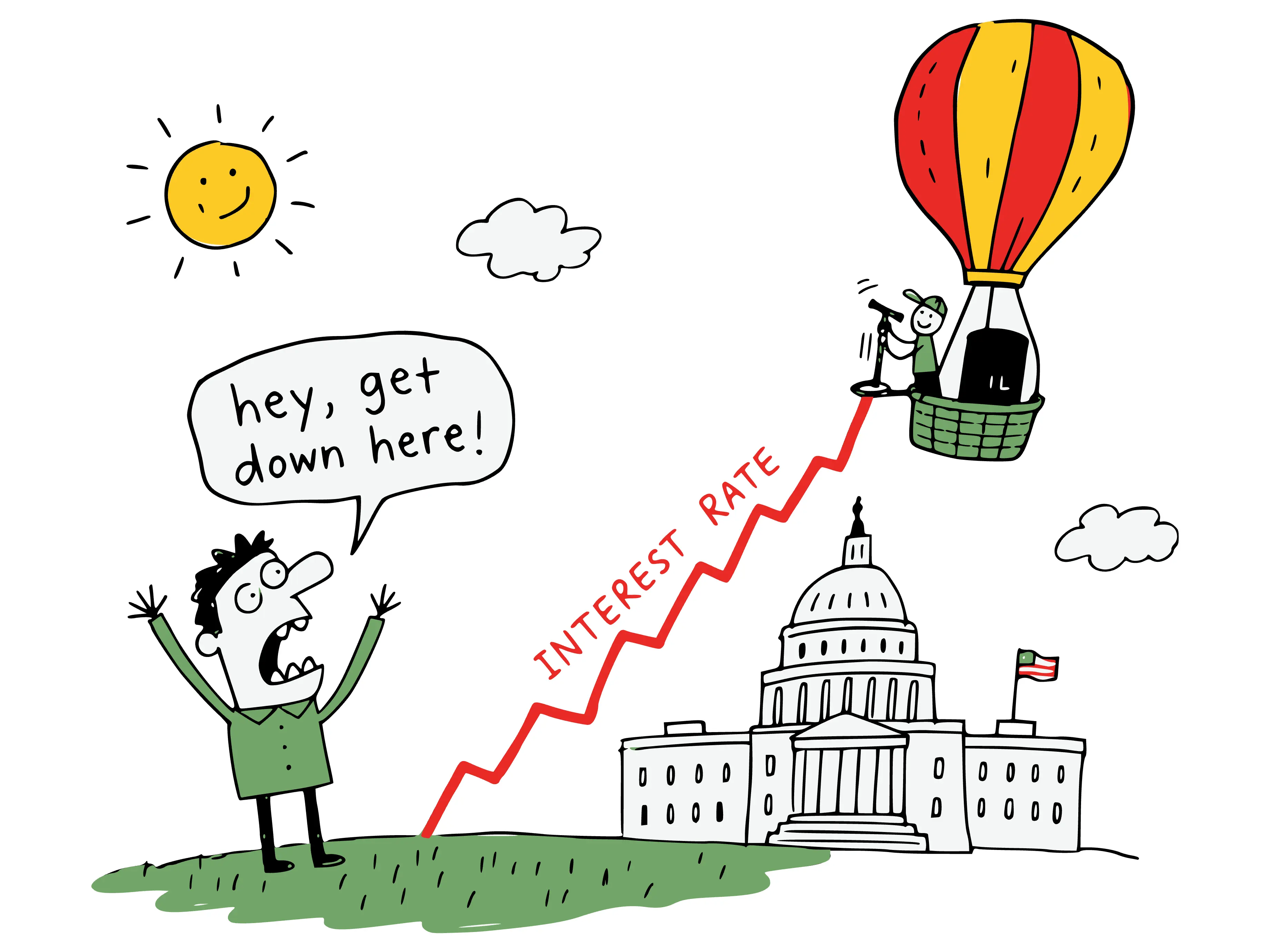
A Treasury note pays a fixed coupon. Buy a 10-year note that pays $45 a year on $1,000 and you get $45 a year no matter what happens to prices. If investors start to expect more inflation, those fixed dollars will buy less, so they pay less for the note. The coupon doesn't change, but the price does: $45 on a note bought for $950 yields about 4.7 percent, against 4.5 percent on one bought for $1,000. A $50 drop in price is a quarter point of yield, the size of Wednesday's Fed move. Higher inflation expectations mean lower bond prices, and lower bond prices mean higher yields. Mortgages are priced off that yield, so they follow.
The same mechanism runs in reverse. When investors expect inflation to cool, they pay more for bonds, yields fall and mortgage rates fall with them, whether or not the Fed has done anything.
Five years of evidence
The mortgage rate tracks the 10-year Treasury more closely than the Fed's rate
Weekly, January 2022 through September 10, 2026 · Freddie Mac, U.S. Treasury and Federal Reserve data via FRED
See the data behind this chart
| Week of | 30-year mortgage | 10-year Treasury | Fed funds rate |
|---|---|---|---|
| Jan 6, 2022 | 3.22% | 1.73% | 0.08% |
| Apr 7, 2022 | 4.72% | 2.66% | 0.33% |
| Jul 7, 2022 | 5.30% | 3.01% | 1.58% |
| Oct 6, 2022 | 6.66% | 3.83% | 3.08% |
| Jan 5, 2023 | 6.48% | 3.71% | 4.33% |
| Apr 6, 2023 | 6.28% | 3.30% | 4.83% |
| Jul 6, 2023 | 6.81% | 4.05% | 5.08% |
| Oct 5, 2023 | 7.49% | 4.72% | 5.33% |
| Jan 4, 2024 | 6.62% | 3.99% | 5.33% |
| Apr 4, 2024 | 6.82% | 4.31% | 5.33% |
| Jul 3, 2024 | 6.95% | 4.36% | 5.33% |
| Oct 3, 2024 | 6.12% | 3.85% | 4.83% |
| Jan 2, 2025 | 6.91% | 4.57% | 4.33% |
| Apr 3, 2025 | 6.64% | 4.06% | 4.33% |
| Jul 3, 2025 | 6.67% | 4.35% | 4.33% |
| Oct 2, 2025 | 6.34% | 4.10% | 4.09% |
| Jan 8, 2026 | 6.16% | 4.19% | 3.64% |
| Apr 2, 2026 | 6.46% | 4.31% | 3.64% |
| Jul 2, 2026 | 6.43% | 4.49% | 3.63% |
| Sep 10, 2026 | 6.76% | 4.95% | 3.63% |
Quarterly sample of a weekly series. Weeks are Freddie Mac survey dates; Treasury and Fed funds values are the latest available on or before each date.
Look at the shaded stretch. Between September and December 2024 the Fed cut its rate by a full percentage point across three meetings, from 5.33 to 4.33 percent on the effective rate. Mortgage rates went the other way. Freddie Mac's 30-year average was 6.08 percent the week after the first cut and 7.04 percent by January 16, 2025. The 10-year yield rose almost a point over the same months, and mortgage rates followed the bond.
Now look at early 2022, which runs the other direction. The Fed didn't raise rates until March 16, 2022, and by the survey the next day Freddie Mac's 30-year average had already climbed from 3.22 percent in the first week of January to 4.16 percent. By May 5 it was 5.27 percent, while the Fed's rate had reached only 0.83. The bond market moved first, on the expectation of hikes, and the Fed spent the rest of the year catching up to it.
Why Wednesday's hike was already priced in
Markets price what they expect. Financial markets "had widely expected the rate hike after hawkish comments from Fed chairman Kevin Warsh last month," NPR's Scott Horsley reported, and the bond market had been adjusting for two months.
The 10-year Treasury yield spent June and early July between 4.4 and 4.75 percent. It was 4.80 percent on September 8 and closed at 5 percent on September 15, the day before the meeting, its first close at 5 percent or higher since July 2007, by Treasury data. Freddie Mac's mortgage average followed: 6.43 percent on July 2, 6.67 on August 13 and 6.76 on September 10, its highest reading of the year.
Then the Fed acted, and the 10-year barely moved. It sat near 5.02 percent on Wednesday afternoon, up two hundredths of a point on the day, per Mortgage News Daily, whose own daily 30-year index reached 7.24 percent, its highest since January 2025. Every part of that move that mattered happened before the vote.
Oil is pushing rates up now
The half-point rise in the 10-year over the summer had a cause of its own. The Fed's statement doesn't name it; it cites "geopolitical developments" as a source of uncertainty and leaves it there. The news coverage is more specific: the war with Iran has pushed oil and gasoline prices higher, NPR reported, and a surge in gasoline accounted for more than a third of the 0.4 percent rise in consumer prices between July and August.
- Oil prices riseWTI crude went from $82.77 a barrel on August 13 to $107.02 on September 15.
- Inflation expectations riseInvestors expect their fixed bond payments to buy less, and the Fed to stay tighter for longer.
- Bond prices fall, yields riseThe 10-year Treasury yield went from 4.63 to 5 percent over the same stretch.
- Mortgage rates riseThe 30-year fixed is that yield plus a lender's cushion: 6.67 to 6.76 percent in Freddie Mac's survey, 7.24 on daily trackers.
Oil moved first, the 10-year followed
Business days, August 13 through September 15, 2026, each series indexed to August 13 = 100 · EIA and U.S. Treasury data via FRED
See the data behind this chart
| Date | WTI crude ($/bbl) | Index | 10-year Treasury | Index |
|---|---|---|---|---|
| Aug 13, 2026 | $82.77 | 100.0 | 4.63% | 100.0 |
| Aug 14, 2026 | $83.99 | 101.5 | 4.68% | 101.1 |
| Aug 17, 2026 | $86.04 | 104.0 | 4.72% | 101.9 |
| Aug 18, 2026 | $86.48 | 104.5 | 4.71% | 101.7 |
| Aug 19, 2026 | $87.28 | 105.4 | 4.65% | 100.4 |
| Aug 20, 2026 | $89.75 | 108.4 | 4.69% | 101.3 |
| Aug 21, 2026 | $87.21 | 105.4 | 4.74% | 102.4 |
| Aug 24, 2026 | $86.34 | 104.3 | 4.70% | 101.5 |
| Aug 25, 2026 | $83.90 | 101.4 | 4.64% | 100.2 |
| Aug 26, 2026 | $83.46 | 100.8 | 4.66% | 100.6 |
| Aug 27, 2026 | $84.81 | 102.5 | 4.67% | 100.9 |
| Aug 28, 2026 | $84.57 | 102.2 | 4.73% | 102.2 |
| Aug 31, 2026 | $87.03 | 105.1 | 4.75% | 102.6 |
| Sep 1, 2026 | $91.48 | 110.5 | 4.79% | 103.5 |
| Sep 2, 2026 | $92.15 | 111.3 | 4.79% | 103.5 |
| Sep 3, 2026 | $92.55 | 111.8 | 4.77% | 103.0 |
| Sep 4, 2026 | $92.69 | 112.0 | 4.78% | 103.2 |
| Sep 8, 2026 | $94.21 | 113.8 | 4.80% | 103.7 |
| Sep 9, 2026 | $97.26 | 117.5 | 4.83% | 104.3 |
| Sep 10, 2026 | $103.57 | 125.1 | 4.95% | 106.9 |
| Sep 11, 2026 | $101.27 | 122.4 | 4.96% | 107.1 |
| Sep 14, 2026 | $102.42 | 123.7 | 4.97% | 107.3 |
| Sep 15, 2026 | $107.02 | 129.3 | 5.00% | 108.0 |
West Texas Intermediate crude, the U.S. benchmark, was $82.77 a barrel on August 13 and $107.02 on September 15, by Energy Information Administration data. Over the same stretch the 10-year yield went from 4.63 to 5 percent. Oil isn't the only thing in that yield; part of the rise is investors expecting the Fed to stay tighter for longer, priced in the same way the hike was. But a $24 move in crude feeds into prices at the pump and in freight, and bond investors don't wait for it to show up in an inflation report before they price it.
What it means if you are buying around here
For a buyer in Mt. Airy or Chestnut Hill, the number to watch isn't the Fed. It's the 10-year Treasury, and behind it, inflation and oil. If oil falls back and inflation cools, mortgage rates can come down without a single Fed cut. If they stay high, rates are likely to stay under pressure no matter what the Fed does at its next meeting.
I've fielded a few nervous texts today. Two things decide whether a house in Germantown or East Falls fits your budget: the rate you qualify for and the price. A quarter-point Fed move barely touches either. On a $360,000 loan, the difference between this year's low of 5.98 percent in late February and the current 6.76 percent is about $184 a month in principal and interest. A further quarter point at these levels adds about $60 a month. That's real money, but not the kind that should decide a house on its own, and a written quote from a local lender beats any headline.
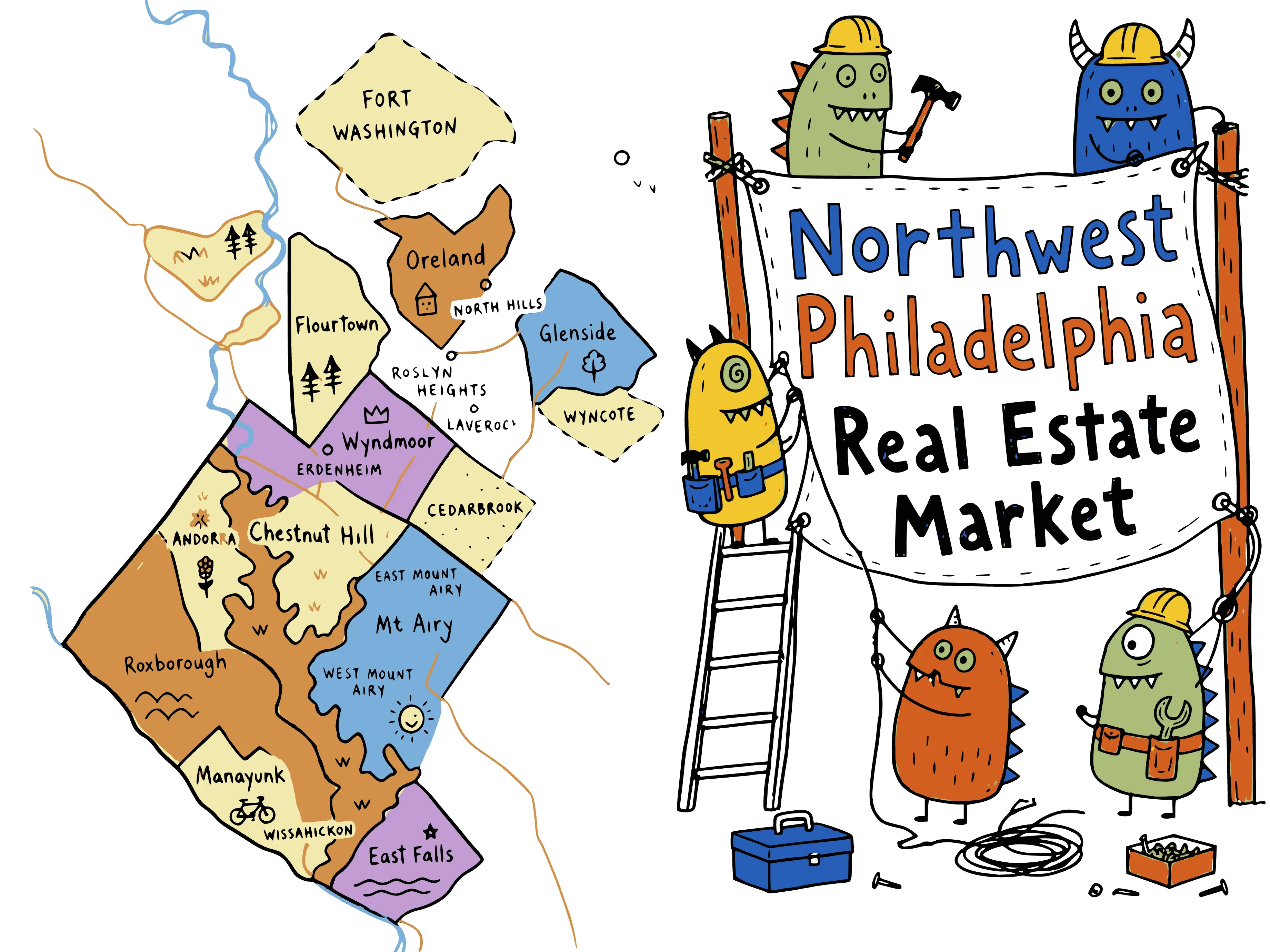
If you've been trying to time a purchase around Northwest Philadelphia and want to walk through the numbers on a specific street or listing, reach out. No pressure either way. If you'd rather start with the practical side of how I work with buyers and sellers in each of the nine communities I cover, the service pages lay it out town by town.
Sources: Federal Reserve, FOMC statement, September 16, 2026; Yahoo Finance, Jennifer Schonberger, September 16, 2026; Federal Reserve Bank of Atlanta, "Not Joined at the Hip," David Pendered, November 10, 2025; Federal Reserve Bank of Dallas, "What drives mortgage rates and their response to monetary policy changes," Matthew McCormick and Srini Ramaswamy, May 7, 2026; Bankrate, Andrew Dehan and Jeff Ostrowski, updated June 18, 2026; Freddie Mac Primary Mortgage Market Survey, 10-year Treasury constant maturity yield, effective federal funds rate and WTI crude spot price, all via FRED, Federal Reserve Bank of St. Louis, retrieved September 16, 2026; Mortgage News Daily 30-year fixed index, September 16, 2026.
Henry is a Philadelphia-based REALTOR® serving buyers and sellers in Northwest Philadelphia and Montgomery County, PA. Questions? Get in touch.
Frequently asked questions
Does a Fed rate hike raise mortgage rates?
Only indirectly, through the bond market. The Fed sets an overnight rate that banks charge each other. A 30-year fixed mortgage is priced off the 10-year Treasury yield plus a lender's margin, and the 10-year moves on inflation expectations and on what investors expect the Fed to do over the next several years. On September 16, 2026 the Fed raised its rate a quarter point and the 10-year yield moved about two hundredths of a point, because the increase had been expected for weeks.
Why did mortgage rates go up before the Fed raised rates?
Bond markets price in what they expect. Between July 1 and September 15, 2026 the 10-year Treasury yield rose from 4.48 to 5 percent as traders came to expect the hike and as oil prices pushed inflation expectations up. Freddie Mac's 30-year average rose from 6.43 to 6.76 percent over roughly the same period. The same thing happened in 2022, when mortgage rates climbed two full points before the Fed had raised its rate by one.
Will a Fed rate cut lower mortgage rates?
Only if the 10-year Treasury yield follows it down. In September, November and December 2024 the Fed cut a full percentage point, and Freddie Mac's 30-year average rose from 6.08 percent to 7.04 percent by mid-January 2025, because the 10-year Treasury yield rose almost a point over the same months. Mortgage rates fall when inflation expectations fall and bond yields drop, whether or not the Fed moves.
Does the Fed hike change the payment on a mortgage I already have?
Only if the loan resets. A fixed-rate mortgage keeps its rate and payment for the life of the loan. Adjustable-rate mortgages and home equity lines of credit reset against short-term benchmarks that follow the Fed, so those payments can rise at the next adjustment date.