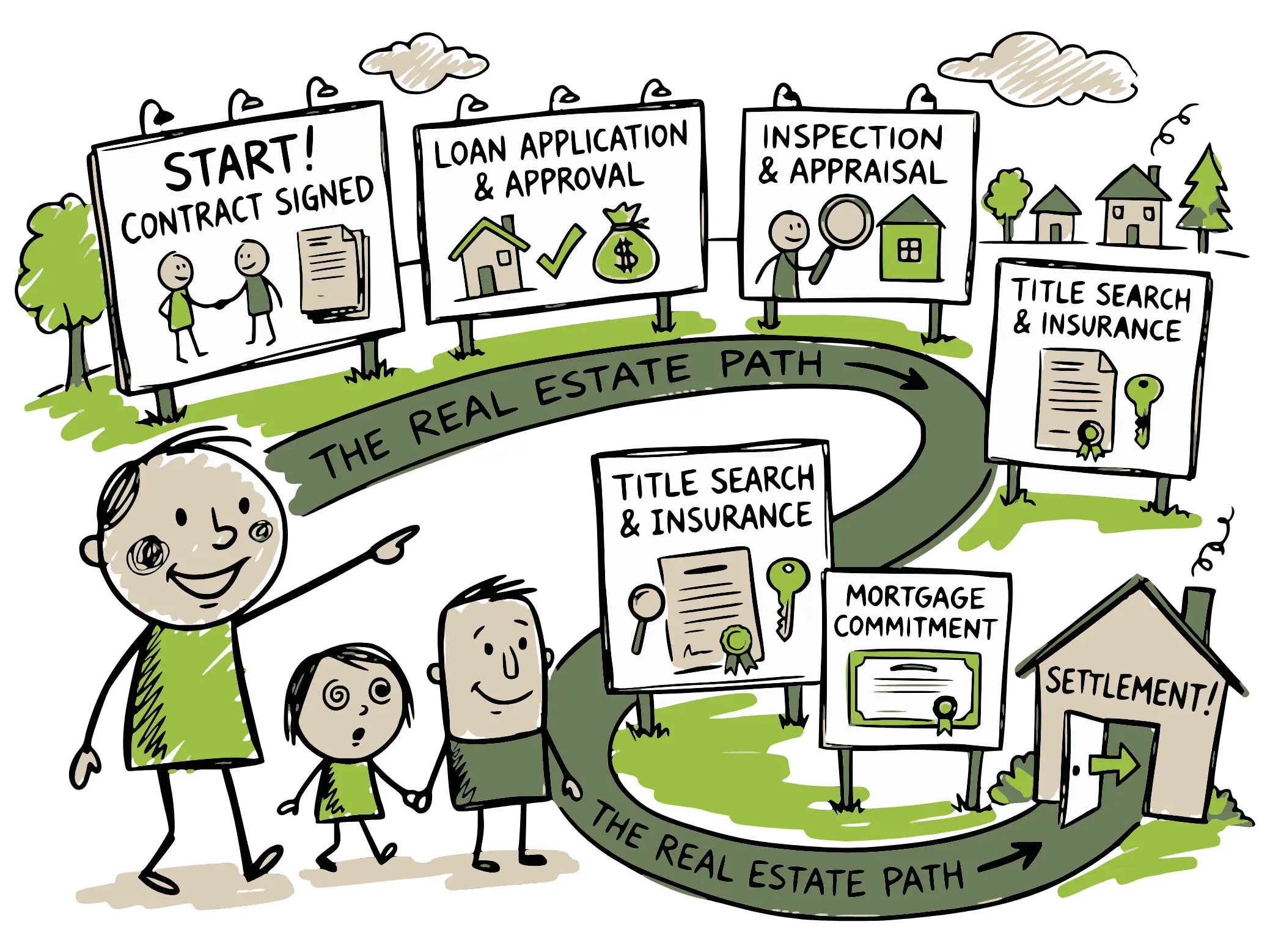

You have been searching for months. Multiple showings, a stack of open houses, Zillow alerts buzzing your phone before you have finished your coffee. Then you walk into a house and you just know. Submitting an offer on a house is the moment all of that searching turns into action, and this post walks through what actually happens once it does.
It is also the moment most first-time buyers start to feel like things are a little out of their hands. That feeling is real, and it is normal. The typical buyer now spends about ten weeks searching before they get here, according to the National Association of REALTORS®. So let's walk through what comes next, so the nerves have somewhere useful to go.
Building the offer with your agent
An offer is more than a number. You and your agent sit down and construct it together as a package: the price, your deposit, your financing terms, inspection contingencies, the settlement date, and the contingencies that protect you if something goes wrong.
This is where good information pays off. A strong listing agent will have shared what the seller is hoping for. Maybe they need a specific settlement date, maybe they want to rent the house back for a few weeks, maybe they just want a quick, clean close. Everything in an offer is negotiable. But the more context you have about what the seller actually wants, the sharper your agent can make your offer without overpaying for it.
In Pennsylvania, the core document is the Standard Agreement of Sale, published by the Pennsylvania Association of REALTORS®. It is a thorough, buyer-friendly contract, and it does a lot of quiet work to protect you. Your agent will also have a stack of other disclosures and documents. Some get submitted with your offer. Others mostly live in their brokerage's compliance file and never leave the office. You do not need to keep track of which is which. That is your agent's job.
Signing and sending it off
Once the offer is built, your agent compiles everything and sends it to you for signature. These days that almost always means an electronic signing service like DocuSign. You review, you sign, often from your own couch at nine at night.
When everything is signed, your agent pulls out exactly what the listing agent needs and sends the offer over. Usually by email. The submission process can vary depending on the listing and the listing agent, but email is the common path, and it is less dramatic than people expect.
One detail worth knowing: a good agent does not just attach the documents and hit send. They write a brief offer summary in the body of the email, a short outline of what your offer contains and, more importantly, what makes it strong. That framing is part of the work. It tells the listing agent how to present you to the seller.
"Offer received" and the part nobody warns you about
Your agent will ask the listing agent to confirm receipt. That is a simple reply, sometimes just a text: offer received, thanks. If you are lucky, the listing agent adds context, like how many offers are in, when the seller plans to review, and when you can expect to hear back.
But here is the part nobody warns you about. The listing agent does not owe you any of that. Sometimes "offer received, thanks" is the entire conversation, and then it goes quiet.
I tell every first-time buyer the same thing at this point: the silence is not a signal. A listing agent who goes quiet is not telling you no. They are not telling you anything. They do not have to respond until they have an answer, so do not read into why an agent is or is not getting back to you. It means nothing, right up until it means something, and your agent will know the difference. Your agent will also know whether a follow-up makes sense or whether you simply wait.
And the waiting is the hardest part. It is the stretch where everything feels out of your control, because it mostly is. That is normal. You did your part the moment you hit send.
Best and final, and the answer
If a home draws multiple offers, the seller may call for "best and final," a request for every buyer to submit their strongest offer by a deadline. It is worth knowing that this is not always offered. Some sellers just review what they have and decide.
This is also the point where buyers ask about an escalation clause, which in Pennsylvania is written on the PAR Price Escalation Addendum (Form PEA). It helps in a narrow set of situations and hands the seller your ceiling in most of the rest, so it is worth understanding before you reach for it.
From there, one of three things happens. The seller accepts your offer, rejects it, or counters. A counter is good news, even when it is not the number you wanted, because it means you are still in the conversation. Your agent will walk you through each path.
In competitive pockets like Chestnut Hill or Mt. Airy, multiple offers and best-and-final rounds are common, and your strategy needs to account for that. In quieter corners of Northwest Philadelphia or Montgomery County, you may be the only offer on the table, which is a very different negotiation. Either way, the process is the same. The pressure is just different.
If you are getting close to that moment, the one where you walk in with an offer, let's sit down before you are actually there. The buyers who feel calm submitting an offer are not braver than everyone else. They just understood the process a week earlier, instead of learning it the night they sign. Buyers focused on Chestnut Hill can see how I approach that market before we talk.
I'm a REALTOR®, not a lawyer, and nothing in this post should be taken as legal advice. The Standard Agreement of Sale referenced here is published by the Pennsylvania Association of REALTORS®. Buyers and sellers should consult with their agent and, where appropriate, a licensed Pennsylvania real estate attorney before acting.
Henry is a Philadelphia-based REALTOR® serving buyers and sellers in Northwest Philadelphia and Montgomery County, PA. Questions? Get in touch.
Frequently asked questions
What documents do I sign when submitting an offer on a house in Pennsylvania?
In Pennsylvania, the central document is the Standard Agreement of Sale, published by the Pennsylvania Association of REALTORS®. Your agent will also prepare related disclosures and addenda. Some of those go to the listing agent with your offer, and some stay in your agent's brokerage compliance file. Most buyers sign everything electronically through a service like DocuSign.
How are home offers submitted to the listing agent?
Most offers are submitted by email. Your agent compiles the signed documents, pulls out exactly what the listing agent needs, and sends it over with a short written summary describing your offer and what makes it strong. The process can vary by listing, but email is the most common path.
How long does it take to hear back after submitting an offer?
It varies widely. Some sellers review offers the same day, others set a deadline a few days out. A listing agent is not required to tell you when the seller will review or how many offers are in. Silence does not mean rejection, and your agent will know whether a follow-up makes sense.
What does 'best and final' mean on a home offer?
Best and final is a request from the seller for every buyer to submit their strongest possible offer by a set deadline, usually when there are multiple offers on the table. It is not always offered. Some sellers simply review what they have and either accept, reject, or counter one buyer directly.