
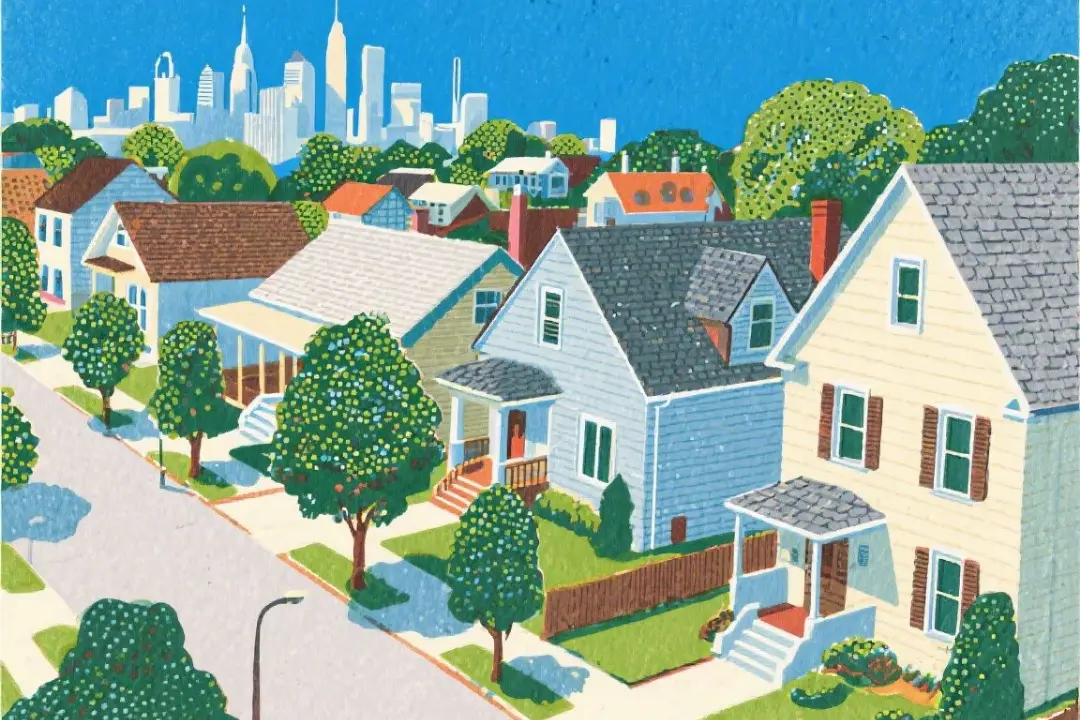
Walk through Mt. Airy or Chestnut Hill and look up. The roof lines tell a story. Steep slate gables on a 1910 stone colonial. A rubberized flat roof on a mid-century twin. Terracotta tiles on a beautiful Neo-Norman home tucked away in Chestnut Hill. Northwest Philadelphia has one of the most architecturally diverse housing stocks in the city, and the roofs are no exception.
As a buyer, knowing what you're looking at matters. Not just aesthetically, but practically.
Pitched Roofs: The Classic NW Philly Look
Many of the older homes in Germantown, Roxborough, and Chestnut Hill have some form of pitched (sloped) roof. The most common is the gable roof, the classic triangular shape you see from the street. Pitched roofs shed water and snow efficiently, which in a Philadelphia winter is no small thing. They also tend to be simpler and cheaper to repair than flat roofs.
What covers them varies a lot by era and budget:
- Slate: The gold standard for Northwest Philly's older stone homes. Natural slate is split into thin sheets and cut to size. It's a genuinely ancient roofing method. Done right, a slate roof can last well over a century. The catch is cost: both the material and the skilled labor to work with it are expensive. If a home you're looking at has original slate, get a specialist to inspect it. Not every roofer works with slate competently. When done correctly, it will be the last roof you ever need.
- Asphalt shingles: The most common material in use today, and for good reason. Affordable, widely available, and relatively easy to replace. According to Russell Roofing most roof jobs in the Philadelphia area involve asphalt in some form. Expect a lifespan of 20–30 years depending on quality and installation.
- Terracotta tile: Less common, but you'll see it on Spanish revival and Mediterranean-influenced homes scattered through the hills of Chestnut Hill and parts of Mt. Airy. Beautiful, heavy, and long-lasting. It also requires structural support to handle the weight, so replacement or repair isn't a DIY situation.
Flat Roofs: Row Homes, Additions, and More
Flat roofs are everywhere in the city, and you'll find plenty of them in Northwest Philly; on the back additions of twins, on commercial-style properties in Manayunk, and on mid-century homes where the architecture called for a cleaner line. They're not actually completely flat (there's a slight pitch for drainage), but they function very differently from a gable. Worth knowing: in most of Northwest Philadelphia, roof drainage ties into the city's combined sewer system — something worth understanding if you're buying in an older part of the city for the first time. Read more about how Philadelphia's combined sewers work.
The most common flat roof types you'll encounter:
- EPDM (rubber): The most prevalent flat roof material today. EPDM is a synthetic rubber membrane that's durable, cost-effective, and relatively easy to patch. A properly installed rubber roof can last 20–25 years.
- Modified bitumen: A step up in durability and puncture resistance. Modified bitumen is an asphalt-based material reinforced with fiberglass or polyester and typically applied in layers. You'll find it on older buildings and on properties that were re-roofed before EPDM became the standard.
- Slag (gravel) roofs: These are rare on residential properties and increasingly uncommon in general. A built-up roof (BUR) covered in gravel ballast was once a standard commercial flat roof approach. If you're buying an older property and the inspector finds this, it's worth understanding its age and condition. These systems can be fairly robust but, you may consider replacement as a sooner than later project.
What to Watch for in a Home Inspection
Whatever the roof type, always get a dedicated roof inspection from someone who knows the material. A home inspector will flag obvious issues, but a roofing specialist can tell you whether that 80-year-old slate is good for another 40 years or needs immediate attention. Flat roofs in particular should be checked for pooling water, membrane separation, and flashing failures around drains and parapets. If there are large trees near the roofline, overhanging branches are worth noting too — they accelerate wear on any roofing material and can trap moisture. See my post on Philadelphia trees for more on managing trees close to structures.
Roofs don't have to be a dealbreaker, but they do have to be understood.
If you're exploring homes in Northwest Philly and want to talk through what you're seeing, reach out. This is exactly the kind of stuff I like to help buyers get comfortable with before making an offer.
Sources: Russell Roofing — Local Roofing Styles in Philadelphia and Surrounding Areas.
Henry is a Philadelphia-based REALTOR® serving buyers and sellers in Northwest Philadelphia and Montgomery County, PA. Questions? Get in touch.