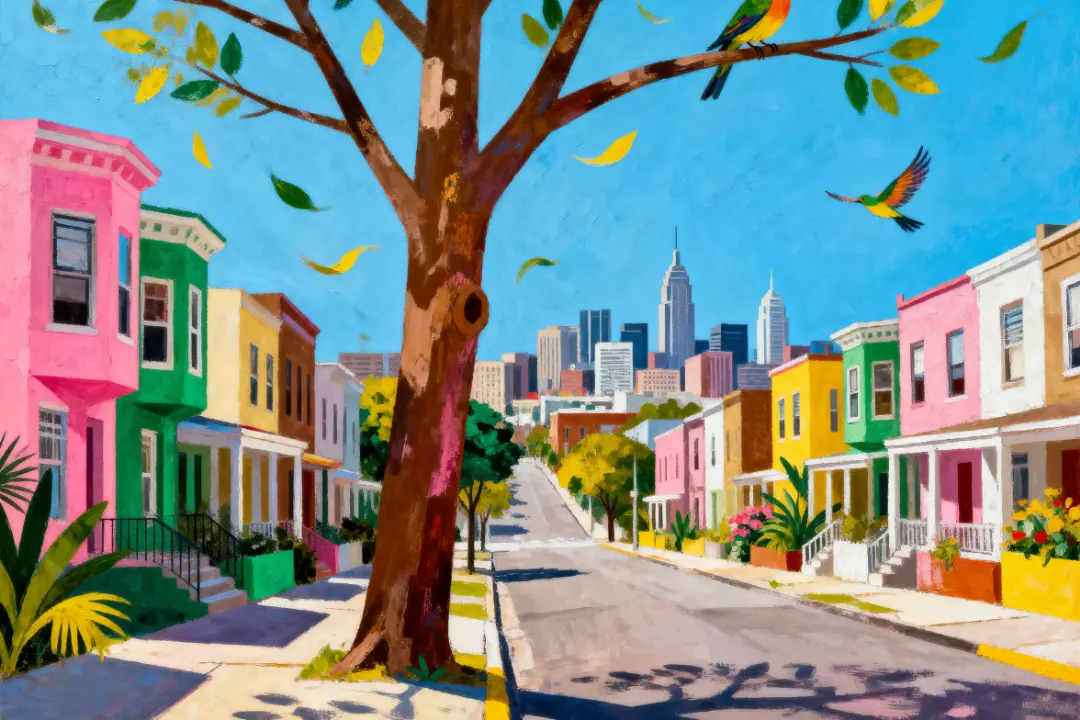
If you've ever walked a shady block in Mt. Airy or Germantown in July and felt a real, physical difference in temperature compared to a bare stretch of asphalt, you already understand what trees do for this city. Philadelphia trees are more than decoration. They're infrastructure.
But planting the wrong tree in the wrong place causes real headaches down the road. It's worth understanding what you're working with before you dig.
Street Trees vs. Yard Trees: They're Not the Same Thing
A street tree lives in the cut-out of pavement between the sidewalk and the curb. It has to survive compacted soil, road salt, car exhaust, and drought. Not every species is built for that. The City of Philadelphia manages street trees through Philadelphia Parks & Recreation, and TreePhilly coordinates planting efforts and resources for residents who want to get involved.
A yard tree is a different story. You have more room, typically better soil quality, and generally more flexibility in what you can plant. There are a few city-supported programs that can help you pick the right species and get started.
The Sycamore Situation
If you live in Northwest Philadelphia, you have more than likely encountered sycamores. These are massive, ancient-looking trees with peeling bark and wide canopies that have been shading these neighborhoods for generations. They're beautiful, and they're iconic.
They're also water-seekers. Sycamore root systems spread wide and actively move toward underground moisture sources, which in many neighborhoods means pipes. If your sewer line has even a hairline crack, sycamore roots will find it. Once they're inside, they cause blockages and can do serious damage to your lateral. It's a known, documented problem, and it's one of the reasons arborists recommend keeping sycamores well away from foundations and plumbing.
None of this means sycamores are bad trees. On a park block or along a wide right-of-way, they're magnificent. But in a typical Philadelphia rowhouse yard, or anywhere near older clay or cast iron sewer lines, there are better choices. A serviceberry or redbud won't go looking for your pipes.
What to Consider Before You Plant
For yard trees near structures or utilities, look for species with less aggressive root systems. Serviceberry, redbud, and certain ornamental cherries tend to be far more manageable in urban settings. Philadelphia Parks & Recreation and TreePhilly maintain a regularly updated species list for exactly this reason.
Philadelphia's Philly Tree Plan is a 10-year strategy to grow and protect the urban forest. Part of that work involves planting smarter, not just planting more.
The basics of maintenance: mulch well, water young trees through their first two summers, and stay aware of root spread near sidewalks and plumbing. None of it is complicated.
Trees Are Worth It
Philadelphia's tree canopy is part of what makes this city livable. Trees lower street-level temperatures, reduce stormwater runoff, clean the air, and make neighborhoods feel like neighborhoods. The Nature Conservancy published an analysis mapping temperatures across Philadelphia and found a clear correlation between canopy coverage and cooler blocks. The interactive map is worth pulling up if you're curious about a specific neighborhood.
Studies consistently show that tree-lined streets carry higher property values. The Arbor Day Foundation looked at data from Portland and Fulton County, Georgia, and found that homes near street trees sold faster and for meaningfully more than comparable homes without them. The full breakdown is worth a read.
The city currently sits at about 20% tree canopy coverage, well below the 30% target considered healthy. Organizations like the Pennsylvania Horticultural Society are working to close that gap through their Tree Tenders program, which has planted over 35,000 trees across the region.
Plant the right tree. Know what you're getting into. Take advantage of the free resources the city offers to help you do it well.
If you're buying in a neighborhood with serious tree canopy and want to talk through what you're looking at, reach out. I know these blocks. We can grab a coffee, preferably in the shade.
References cited: TreePhilly, TreePhilly Spring 2026 Tree List, Philly Tree Plan (City of Philadelphia), The Nature Conservancy: Philadelphia Urban Heat & Tree Canopy Analysis, TNC Philadelphia Temperature & Tree Canopy Interactive Map, The Arbor Day Foundation: The Value of Trees.
Henry is a Philadelphia-based REALTOR® serving buyers and sellers in Northwest Philadelphia and Montgomery County, PA. Questions? Get in touch.
Frequently asked questions
Do trees increase property value in Philadelphia?
Studies consistently show tree-lined streets carry higher property values. The Arbor Day Foundation's analysis of data from Portland and Fulton County, Georgia found homes near street trees sold faster and for meaningfully more than comparable homes without them. In Philadelphia specifically, The Nature Conservancy's heat mapping shows tree-canopied blocks run measurably cooler, a livability difference buyers notice in July.
Can sycamore roots damage sewer lines?
Yes. Sycamore root systems spread wide and actively seek underground moisture, and if a sewer lateral has even a hairline crack, roots will find it, causing blockages and potentially serious damage. This matters in Northwest Philadelphia, where many homes have original clay or cast iron laterals. Arborists recommend keeping sycamores well away from foundations and plumbing; near pipes, species like serviceberry or redbud are safer choices.
What's the difference between a street tree and a yard tree in Philadelphia?
A street tree lives in the cut-out between the sidewalk and curb and is managed through Philadelphia Parks & Recreation, with TreePhilly coordinating planting programs. It has to tolerate compacted soil, road salt, and drought, so only certain species qualify. A yard tree is on your own property, with better soil and more flexibility in species choice.