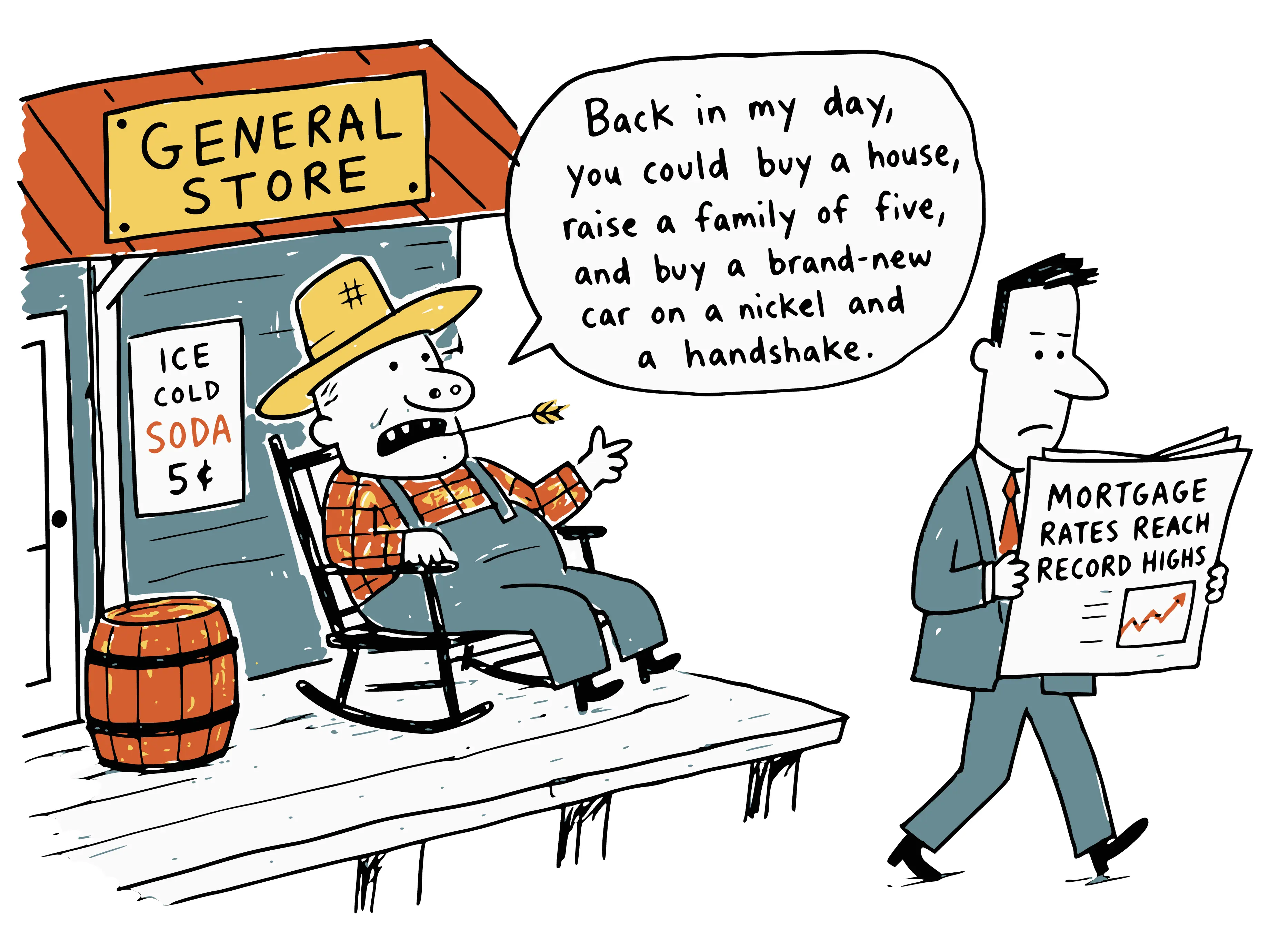

I've been seeing a lot of memes posted by agents poking fun at "the buyer's dad" upending real estate deals. You know the format. A happy song plays over clips of an agent, a buyer, and a lender all beaming. The music builds. And then, right as it crescendos, the buyer's dad walks into frame and smashes something. Cut to black.
I'll admit I've chuckled at a few of them. But I've also been in this business long enough to know that sometimes dad's right.
The Question Every Buyer Has Before They Sign Anything
Before buyers write a single offer, one of the most common things I hear is some version of "what if." What if I change my mind? What if the inspection is a disaster? What if I lose my job before closing? What if the house turns out to be nothing like I thought?
These are good questions, and they deserve real answers before you're under contract. Not after.
Risk Tolerance Is Personal
Every buyer comes to a transaction with a different set of circumstances. Different savings cushions, different timelines, different comfort levels with uncertainty. A first-time buyer putting everything they have into a down payment sees risk very differently than someone trading equity from a prior sale. Neither position is wrong. They're just different.
The pressure to push through on a deal can be real. It doesn't always serve the buyer. And the fact that someone outside the transaction is raising concerns doesn't automatically make those concerns invalid. It just means they need to be evaluated honestly, with full information.
What the Pennsylvania Agreement Actually Says
In Pennsylvania, most residential transactions use the Standard Agreement for the Sale of Real Estate (PAR Form ASR) or something very similar to it. That agreement governs how and when a buyer can exit a transaction, and whether their deposit comes back with them.
The agreement builds in several formal exit points.
The inspection contingency is typically the widest window, and it runs in two parts (all negotiable): 10 days to conduct inspections, obtain reports, and deliver them to the seller; and 5 days for buyer and seller to negotiate. Negotiation can begin within the 10-day window, but a common mistake is assuming inspections can spill into the negotiation period. They usually can't. If buyer and seller don't reach agreement, the buyer can terminate and get the deposit back. These timelines are not suggestions.
The financing contingency works differently. Buyers who included a financing contingency have protections if their mortgage application is denied. But there's a line worth knowing: the agreement requires a good faith effort to obtain financing. A buyer who actually qualifies but manufactures a denial to exit a deal is on risky ground, and the deposit may not come back. If you're weighing how to structure a financing contingency in the first place, my post on cash vs. financed offers covers that ground.
Title issues offer a cleaner exit. Under Paragraph 14, if the seller cannot convey good and marketable title insurable at regular rates, the buyer can terminate with full deposit returned. That one is fairly black and white.
Timing Is Everything
The single thing that catches buyers off guard most often is the deadline, not the contingency itself. Under Paragraph 5, the settlement date and all performance dates in the agreement are binding. Miss a response window during inspection negotiations, fail to deliver written termination notice in time, and the agreement can work against you in ways that are hard to undo.
This is one of the reasons having an agent who knows the document matters as much as having one who knows the market.
When the Negotiation Goes Nowhere
Sometimes the inspection comes back with real issues, the buyer asks for repairs or a credit, and the seller just won't move. Both sides are dug in. The clock is ticking. Neither party is wrong, exactly. They just want different things, and no amount of back-and-forth is going to close the gap.
This happens. And when it does, the negotiation period is doing exactly what it was designed to do: giving the buyer a clean decision point. Stay in on the seller's terms, or walk away with the deposit and start over. There's no third option that involves waiting them out.
The pressure in that moment can feel enormous, especially after inspections, the back-and-forth, and the emotional investment of having found a house you liked. But a deal that closes on terms you didn't want is not a win. Sometimes the right answer is the hard decision to break ties and move on.
Once the Contingencies Pass
Once contingencies have been satisfied or waived, walking away typically means forfeiting the deposit. In some cases, a seller could pursue additional remedies. That's when the conversation needs to involve your agent and a licensed Pennsylvania real estate attorney, not just whoever has opinions at the kitchen table.
This Is Not Legal Advice
I'm a REALTOR licensed in Pennsylvania, not a lawyer. I mention the agreement provisions above just to give context to the larger theme of terminating a transaction. Every transaction is different, and the right move when you're having serious doubts is to talk to your agent and, where it makes sense, a licensed Pennsylvania real estate attorney before making any decisions.
And for what it's worth: if something doesn't feel right, that feeling is worth taking seriously. Not every deal should cross the finish line. The right move is the one you can actually live with.
If you're thinking about buying in Northwest Philly or Montgomery County and want to understand how the process actually works before you commit to anything, that's exactly what a buyer consultation is for. Reach out and we'll sit down. Buyers in Oreland and Flourtown can read how I handle that conversation there.
Related reading: - What a Home Inspection Actually Covers (and What It Doesn't) - Escalation Clauses: How They Work, and When They Backfire - Cash vs. Financed Offers: What Buyers Actually Need to Know
The agreement language referenced in this post is drawn from the Pennsylvania Association of Realtors Standard Agreement for the Sale of Real Estate (PAR Form ASR, rev. 5/25, rel. 9/25). Henry is a Philadelphia-based REALTOR® serving buyers and sellers in Northwest Philadelphia and Montgomery County, PA. Questions? Get in touch.
Frequently asked questions
Can a buyer walk away from a real estate deal in Pennsylvania?
Yes, but when and whether you get your deposit back depends entirely on where you are in the transaction and which contingencies are still active. Pennsylvania's Standard Agreement for the Sale of Real Estate includes several formal exit points, most commonly the inspection contingency and the financing contingency, during which a buyer can terminate and receive a full deposit refund. Once contingencies are satisfied or waived, walking away typically means forfeiting the deposit.
What happens to the deposit if a buyer backs out of a real estate deal?
If a buyer terminates during an active contingency period, the deposit is typically returned in full. If a buyer walks away after contingencies have been removed or waived, the deposit is generally forfeited. In some cases, a seller could pursue additional legal remedies beyond the deposit. The specifics depend on the terms of your agreement and the circumstances of the termination.
Can a buyer back out after the home inspection in Pennsylvania?
Yes, during the inspection contingency period. In Pennsylvania, the standard agreement gives buyers a window, typically 10 days, to conduct inspections and deliver reports to the seller, followed by a separate negotiation period. If the buyer and seller cannot reach agreement on inspection issues, the buyer can terminate and receive the deposit back. Missing the deadline for written termination notice, however, can work against the buyer.
What is the financing contingency and how does it protect buyers?
A financing contingency protects buyers if their mortgage application is denied. If included in the agreement and the buyer's loan is not approved, the buyer can terminate and get the deposit back. However, the agreement requires a good faith effort to obtain financing. Buyers who manufacture a denial to exit a deal are on risky ground and may not recover the deposit.